The United States is widely recognized for having one of the most advanced medical systems in the world. It excels at complex surgeries, emergency interventions, pharmaceutical innovation and high-tech diagnostics. When illness becomes acute, American healthcare can be extraordinary. Yet despite this clinical strength, the country continues to lose what might be called the “health battle,” the long-term struggle to prevent disease, manage chronic conditions and sustain population well-being.
In Fixing the Foundation, Dr. Richard E. Cairl explores this paradox at its core. The issue, he argues, is not that American medicine fails at treating disease. Rather, it is that the system is structurally optimized for intervention, not for sustained health creation.
This distinction is critical. Treating disease is episodic. It happens in hospitals, clinics and emergency departments. Health, however, is continuous. It is shaped every day by behavior, environment and decision-making outside clinical settings. The gap between these two realities explains much of the system’s underperformance.
Patients may receive world-class care during a hospital stay, but what happens after discharge often determines whether recovery is sustained or reversed. Medication adherence, dietary habits, physical activity, symptom monitoring and timely communication with providers all influence long-term outcomes. When these elements are inconsistent, even the best medical interventions lose effectiveness over time.
Dr. Cairl frames this as a foundational imbalance in healthcare design. The system is highly skilled at responding to crises but far less effective at supporting the everyday actions that prevent crises from occurring in the first place. As a result, the United States ends up investing heavily in treating advanced disease while struggling to reduce its underlying burden.
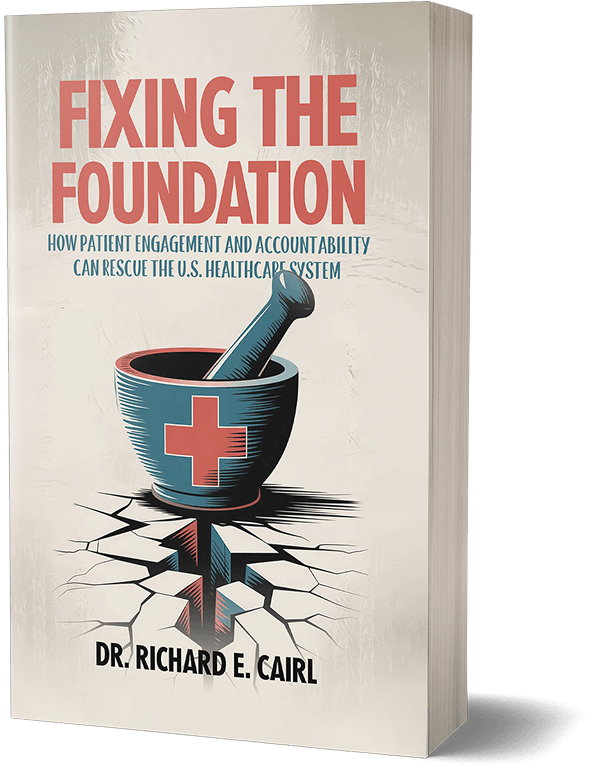
Chronic illnesses such as cardiovascular disease, diabetes, obesity and hypertension illustrate this imbalance clearly. These conditions are not solved in a single clinical encounter; they are managed over years through daily choices. Yet healthcare delivery remains largely episodic, with limited continuity between visits. This creates a disconnect between medical knowledge and real-world application.
In Fixing the Foundation, Dr. Cairl argues that this disconnect is not inevitable; it is a design failure. Healthcare systems have historically treated patients as recipients of care rather than as active participants in producing health. But in reality, patients are the primary drivers of long-term outcomes. It is their daily behavior, not just clinical intervention, that determines whether the disease is controlled or progresses.
This insight shifts the focus of reform. Improving American healthcare is not only about refining treatments or expanding access. It is about closing the gap between what is prescribed and what is practiced. That requires embedding patient engagement and accountability into the structure of care itself.
Engagement means patients are supported in asking questions, understanding instructions and participating in decisions. Accountability means they are empowered and expected to follow through on agreed-upon care plans, disclose barriers and recognize early warning signs. These are not punitive expectations but essential components of effective care.
Importantly, Dr. Cairl does not suggest that patients are solely responsible for outcomes. On the contrary, he emphasizes a shared model. Providers must communicate clearly and design realistic care plans. Systems must reduce friction and improve access. Technology, including AI tools, can extend support beyond the clinic, helping patients manage daily behaviors and detect risks early.
But without patient engagement, even the most advanced systems will continue to underperform.
Fixing the Foundation ultimately argues that America’s healthcare strength in treating disease is not enough to win the broader health battle. Survival and stabilization are no longer the only goals. The challenge now is sustainability, preventing illness, maintaining wellness and supporting long-term outcomes at scale.
Until healthcare fully integrates what happens outside the clinic into its core design, the system will continue to excel at rescue while struggling at prevention.
The solution is not more medicine alone. It is a redefinition of healthcare itself, one that recognizes that the real battle for health is fought not in hospitals, but in everyday life.