America’s healthcare crisis is usually described in terms of cost, access, insurance, staffing shortages and hospital capacity. Those issues are real, but they do not tell the whole story.
A large part of the crisis is also about behavior.
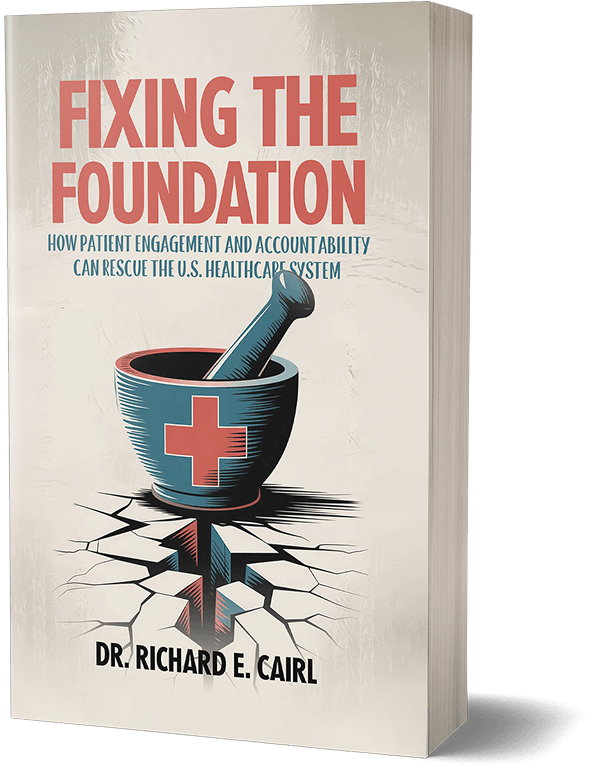
In Fixing the Foundation: How Patient Engagement and Accountability Can Rescue the U.S. Healthcare System, Dr. Richard E. Cairl argues that many of the country’s most expensive and persistent health problems are tied to what happens in everyday life, far beyond the walls of hospitals and clinics.
Chronic conditions such as diabetes, hypertension, cardiovascular disease and obesity require more than medical treatment. They also require patients to monitor symptoms, take medications consistently, attend follow-up appointments, make lifestyle changes and act on medical advice over long periods of time.
That is where behavior change becomes central.
The problem is that knowing what to do does not automatically mean people will do it. Dr. Cairl challenges the common assumption that health education alone is enough to change behavior. He draws attention to factors such as present bias, inertia, low self-efficacy, emotional stress, habits and environmental barriers that can make healthy choices difficult to sustain.
A patient may understand that exercise is important and still avoid it. Someone may know that medication adherence matters and still miss doses. Another person may recognize the risks of an unhealthy diet but continue making the same choices because those habits are familiar, convenient or emotionally comforting.
This is not simply a knowledge problem.
It is a behavior-design problem.
That distinction is one of the most important ideas in Fixing the Foundation. Dr. Cairl explains that effective patient engagement requires more than giving instructions. It may involve motivational interviewing, personalized goal setting, behavioral nudges, self-monitoring, incentives, reminders and communication strategies that help patients move from intention to action.
The healthcare system also has a role to play.
Patients cannot be expected to change difficult behaviors without support. Providers need time, tools and training to communicate effectively and understand each patient’s readiness to engage. Healthcare organizations must create systems that make healthy actions easier, while policymakers must invest more seriously in prevention and long-term self-management.
Technology may also help.
Dr. Cairl explores how AI-driven chatbots, wearables, digital coaching platforms and patient portals can provide reminders, track progress, reinforce healthy routines and support patients between visits. These tools can help turn occasional medical advice into more consistent daily action.
But technology alone is not enough either.
At the center of the issue is a basic reality: many health outcomes are shaped by repeated decisions made outside clinical settings. What patients eat, whether they move, whether they take medications, whether they monitor symptoms and whether they follow through on care plans can influence the course of chronic disease.
That is why America’s healthcare crisis cannot be solved only by building better hospitals, changing reimbursement models or expanding access.
It must also address the human side of health.
Fixing the Foundation: How Patient Engagement and Accountability Can Rescue the U.S. Healthcare System by Dr. Richard E. Cairl makes the case that sustainable reform requires patients to become active, supported participants in behavior change, not passive recipients of treatment.
If America wants better outcomes, it may need to focus not only on how care is delivered, but also on how healthier actions are understood, supported and sustained.
Read the book on Amazon: https://www.amazon.com/dp/B0GRCRBKB6/