“I will start Monday.”
It sounds harmless. Maybe even responsible. But sometimes, that sentence is less a plan and more a delay disguised as one.
In Fixing the Foundation: How Patient Engagement and Accountability Can Rescue the U.S. Healthcare System, Dr. Richard E. Cairl examines rationalization as one of the quieter barriers to better health. Rationalization happens when people create believable explanations for choices that conflict with their stated goals. Instead of changing the behavior, they change the story they tell themselves about it.
That can be surprisingly powerful.
A patient trying to lose weight may say, “I had a stressful day, so I deserved this.” Someone who has been told to exercise may think, “I am too busy this week.” Another person may postpone a healthier routine with, “I will start Monday” or dismiss a setback by saying, “One time won’t make a difference.”
Dr. Cairl connects these thought patterns to cognitive dissonance: the discomfort people feel when their actions don’t match their intentions or values. Rather than confront that discomfort by changing behavior, people may rationalize the behavior instead. Over time, these explanations can become protective scripts that make inaction feel justified.
The challenge is that rationalization often feels reasonable in the moment.
That is why health information alone may not be enough. A patient can fully understand the risks of smoking, inactivity, poor diet or medication nonadherence and still struggle to change. Dr. Cairl’s broader argument is that behavior is shaped by far more than knowledge. Motivation, habits, emotion, confidence, environment and cognitive bias all play a role.
So how do we move from excuses to action?
The answer is not shame.
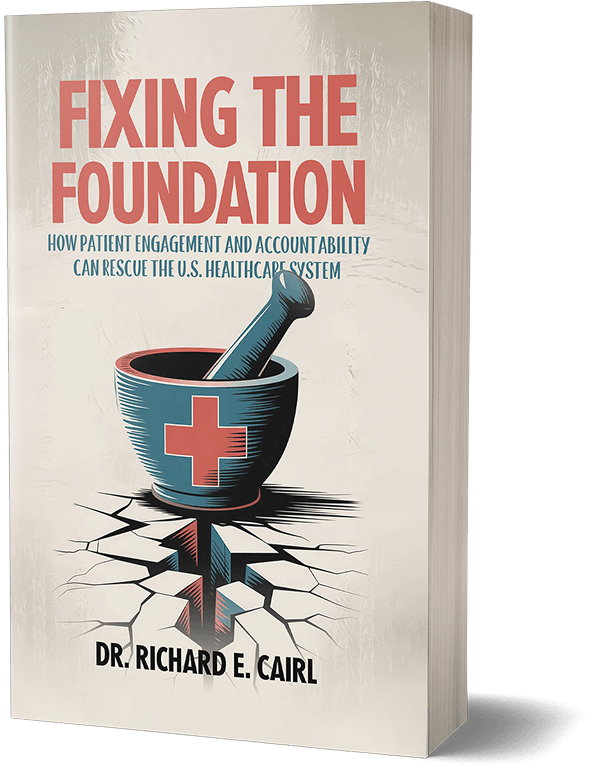
Fixing the Foundation repeatedly rejects the idea that accountability should mean blame. Instead, Dr. Cairl promotes a model of supported accountability, one where patients are treated as capable participants who are given the tools, encouragement and structure needed to act.
That can include small goals, self-monitoring, behavioral nudges, motivational interviewing, reminders and clear feedback. Instead of expecting someone to completely overhaul their lifestyle overnight, healthcare providers can help patients identify realistic next steps and build momentum.
This matters because rationalization can quietly undermine long-term health without ever looking dramatic.
A skipped walk becomes a skipped week. One missed medication dose becomes a pattern. A delayed follow-up becomes months of inaction. Each decision may seem small, but repeated choices can shape the management of chronic disease.
Dr. Cairl’s message is not that patients should be perfect. It is that they should become more aware of the stories they tell themselves when they avoid change and that the healthcare system should help them move from intention to follow-through.
Fixing the Foundation: How Patient Engagement and Accountability Can Rescue the U.S. Healthcare System offers a practical, behavior-focused look at why better health requires more than good advice. It requires engagement, support and the willingness to act before “Monday” becomes another excuse.
Read Dr. Richard E. Cairl’s book on Amazon: https://www.amazon.com/dp/B0GRCRBKB6/