Few questions in modern healthcare are more uncomfortable or more necessary than this one: should patients share accountability for their health outcomes?
For decades, the dominant narrative in American healthcare has emphasized access, coverage and provider responsibility. Clinicians diagnose, prescribe, treat and manage. Systems are evaluated on quality, efficiency and equity. Patients, in this framework, are largely positioned as recipients of care entitled to treatment, protected from harm and supported through illness.
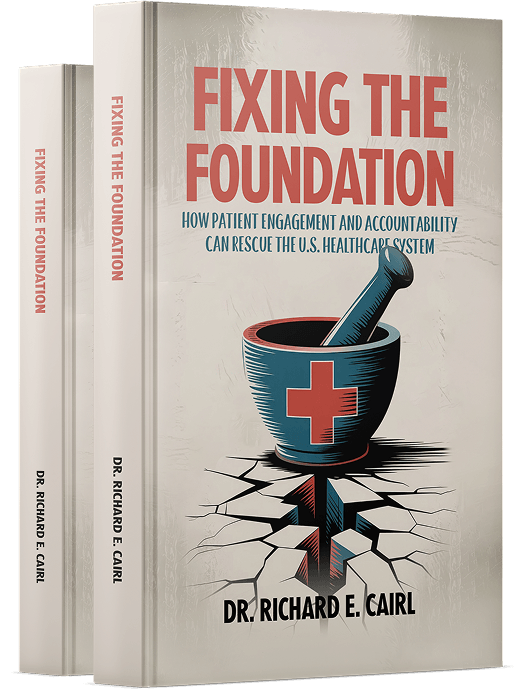
In Fixing the Foundation, Dr. Richard E. Cairl argues that this model, while essential for protecting rights and ensuring access, is incomplete. It overlooks a central truth: health outcomes are not produced by healthcare systems alone. They are co-produced in the everyday actions of patients and providers alike. And if outcomes are co-produced, then responsibility cannot rest on one side of the equation.
This is where the debate becomes uncomfortable. The idea of patient accountability is often misunderstood as blame. But Dr. Cairl makes a critical distinction: accountability is not punishment; it is participation. It is the recognition that health is shaped not only in clinics and hospitals, but in kitchens, workplaces, homes and daily routines.
The evidence is difficult to ignore. Chronic diseases such as diabetes, hypertension, cardiovascular disease and obesity are not primarily controlled through episodic medical interventions. They are managed or mismanaged through thousands of small decisions made outside the healthcare system: medication adherence, dietary choices, physical activity, symptom monitoring and timely communication with providers.
When these behaviors are inconsistent, even the most advanced medical care struggles to achieve lasting impact. When they are supported and sustained, outcomes improve dramatically.
Yet despite this reality, healthcare systems rarely formalize patient engagement as a structured responsibility. Engagement is encouraged, but not operationalized. Accountability is implied, but not supported. Patients are given instructions, but not always the tools, systems or reinforcement needed to follow through consistently.
Dr. Cairl describes this as a missing foundation in healthcare reform. Without integrating patient engagement and accountability into the core design of care, systems remain reactive, responding to crises rather than preventing them.
The controversy lies in what follows from this insight. If patients influence outcomes so significantly, should they also share responsibility for them?
Fixing the Foundation answers this carefully: yes but not in isolation and not without reciprocal obligations from the system itself. Shared accountability does not mean shifting blame onto patients. It means redesigning healthcare so that responsibility is distributed across a true partnership.
In this model, patients are expected to engage actively in their care: asking questions, confirming understanding, disclosing barriers, adhering to treatment plans, recognizing warning signs and communicating openly about lapses. Providers, in turn, are responsible for clear communication, trust-building, cultural responsiveness and designing realistic care plans that reflect patients’ lived realities.
Technology, particularly AI-driven tools, can support this shift by extending care beyond the clinic, helping patients stay on track, detect early risks and maintain daily habits. But even the most advanced tools cannot replace the need for human engagement and shared responsibility.
The real issue, Dr. Cairl argues, is not whether accountability should exist, but whether healthcare systems are willing to acknowledge how deeply outcomes depend on behavior outside the clinic. Avoiding this conversation preserves the status quo but at a cost: rising chronic disease, preventable hospitalizations and a system perpetually in crisis mode.
Fixing the Foundation challenges readers to confront this debate directly. It suggests that the future of healthcare reform depends on moving beyond a one-sided model of care toward a shared framework of engagement and accountability.
Ultimately, the question is not whether patients should share accountability. It is whether healthcare can afford to continue pretending that they don’t already.